
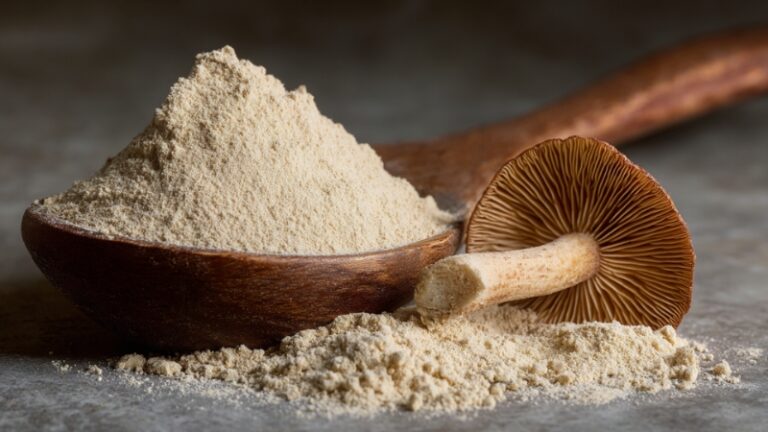
Mushroom powder is no longer a niche pantry ingredient reserved for herbalists and chefs. It has quietly become a daily-use functional food for people who want better immunity, stronger focus, improved digestion, and more nutrients without changing their entire diet.
At the same time, home cooks use it as a powerful natural flavor enhancer that replaces artificial seasonings and reduces sodium.
What makes mushroom powder so appealing is that it delivers two things at once: nutrition and depth of flavor. It concentrates everything mushrooms already contain into a form that stores well, pours easily, and blends into almost any dish or drink.
Whether you care more about health or cooking, it earns its place in the kitchen.
What Mushroom Powder Actually Is (And What It Is Not)
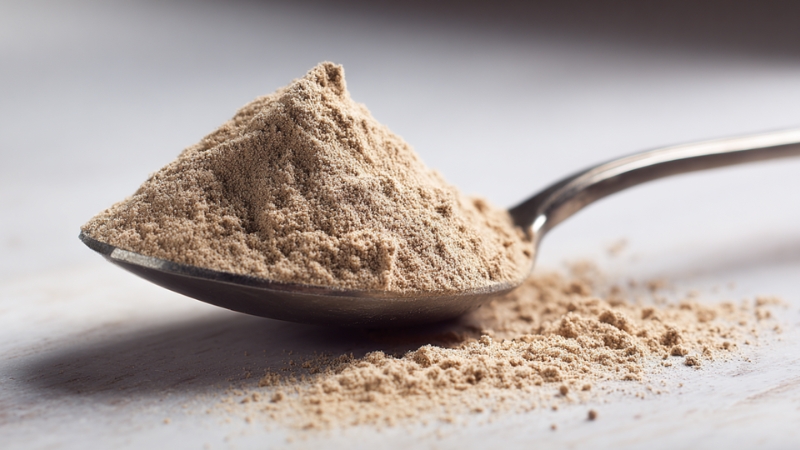
Mushroom powder is made by fully drying mushrooms and grinding them into a fine powder. Nothing more is required. There are no fillers, no binders, and no chemical processing when done correctly at home.
It is not the same as mushroom extract. Extracts use solvents or hot water to pull specific compounds out of the mushroom.
Powder keeps the entire mushroom profile intact, including fiber, minerals, beta-glucans, antioxidants, and protein.
It is also not just one product. Mushroom powder can be made from:
- Culinary mushrooms like shiitake, porcini, cremini, and oyster
- Medicinal mushrooms like lion’s mane, reishi, chaga, and turkey tail
- Or blends that combine several types
Each version serves a different purpose.
Nutritional Snapshot: What You Actually Get From Mushroom Powder
| Nutrient | Why It Matters |
| Beta-glucans | Support immune system function |
| Fiber | Aids digestion and gut health |
| B vitamins | Help energy production |
| Potassium | Supports heart and muscle function |
| Antioxidants | Reduce oxidative stress |
| Ergothioneine | Unique mushroom antioxidant linked to cellular protection |
Drying intensifies these nutrients by removing water and concentrating everything else.
Health Benefits of Mushroom Powder (What People Actually Use It For)
View this post on Instagram
Immune Support Without Stimulants
Many people take mushroom powder daily because beta-glucans naturally activate the immune response without overstimulation.
Unlike vitamin megadoses that push the system aggressively, mushroom compounds help train immune cells to respond more efficiently. This is why people often notice fewer seasonal illnesses after consistent use.
Brain Function and Focus
Lion’s mane mushroom powder is widely used for memory, focus, and nerve support. Research shows it can stimulate nerve growth factor production, which supports cognitive function over time.
People often describe this effect as mental clarity rather than a stimulant “boost.”
Stress and Nervous System Balance
Reishi powder is commonly used for stress regulation and sleep support. It does not act as a sedative but helps moderate cortisol levels and nervous system overstimulation.
Digestive Support and Gut Health
Because mushroom powder keeps full mushroom fiber intact, it feeds beneficial gut bacteria while also improving stool regularity. Many people notice better digestion within one to two weeks of regular use.
Natural Anti-Inflammatory Action
Compounds found in chaga, turkey tail, and shiitake mushrooms help downregulate inflammation pathways without the stomach irritation seen with many artificial anti-inflammatory products.
Culinary Uses: Why Chefs Love Mushroom Powder
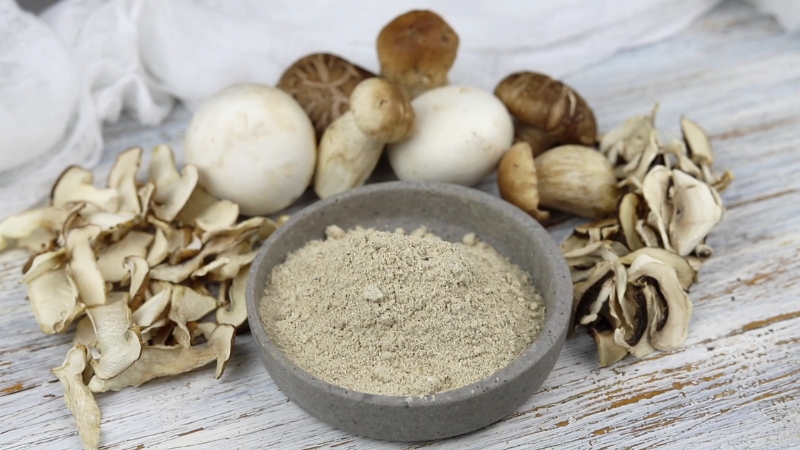
From a cooking perspective, mushroom powder is prized for its natural umami intensity. It deepens flavor without adding salt, fat, or artificial enhancers.
That makes it extremely useful for people reducing sodium or avoiding MSG.
Mushroom powder blends easily into:
- Soups and stews
- Sauces and gravies
- Broths and stocks
- Pasta dishes
- Marinades
- Plant-based meats
- Rice and grain dishes
A small amount intensifies flavor in ways salt alone never can.
How Much Mushroom Powder Should You Use?
| Purpose | Typical Daily Amount |
| General wellness | ½ to 1 teaspoon |
| Immune focus | 1 to 2 teaspoons |
| Cognitive support | 1 teaspoon lion’s mane |
| Culinary flavor | ¼ to ½ teaspoon per dish |
More is not better. Mushroom powder works best when used consistently in moderate amounts.
How to Make Mushroom Powder at Home (Step-By-Step, Correctly)
Step 1: Choose the Right Mushrooms
Use fresh, firm, clean mushrooms with no slime or dark spots. Shiitake, cremini, porcini, oyster, and lion’s mane all work well. Avoid any mushrooms with visible mold or breakdown.
Step 2: Clean Without Soaking
Do not wash mushrooms under running water unless necessary. Use a damp cloth or soft brush instead. Mushrooms absorb water easily, which makes drying slower and increases mold risk.
Step 3: Slice Thin for Even Drying
Slice mushrooms into thin, uniform pieces. The thinner the slices, the faster and safer the drying process.
Step 4: Dry Fully (This Is the Most Important Step)
You can dry mushrooms using:
- A food dehydrator at low heat
- An oven set to its lowest temperature with the door slightly open
- Air drying in very dry climates
They must become fully brittle, not leathery. If any moisture remains inside, the powder will spoil.
Step 5: Grind Into Fine Powder
Use a spice grinder, coffee grinder, or high-speed blender. Grind in small batches until you get a fine, flour-like consistency.
Step 6: Store Properly
Store mushroom powder in:
- An airtight glass jar
- Away from heat and sunlight
- In a dry environment
Properly dried and stored powder can last 6 to 12 months without losing potency.
Homemade vs Store-Bought Mushroom Powder
| Feature | Homemade | Store-Bought |
| Ingredient control | Full control | Often blended |
| Cost per use | Lower | Higher |
| Potency | Depends on drying | Often standardized |
| Shelf life | Shorter | Longer |
| Convenience | Requires effort | Ready to use |
Homemade powder gives purity and flexibility. Store-bought powder offers consistency and ease.
Who Should Be Cautious With Mushroom Powder
Most people tolerate mushroom powder extremely well, but there are a few exceptions. Individuals with mushroom allergies should obviously avoid them.
Anyone on immunosuppressive medication should consult a doctor before using immunostimulant mushroom types like reishi or turkey tail.
Pregnant individuals should avoid medicinal mushroom powders unless medically approved.
Common Mistakes That Ruin Mushroom Powder
The most common failure points are:
- Incomplete drying
- Storing in humid spaces
- Grinding warm mushrooms instead of fully cooled ones
- Mixing multiple mushroom types without testing tolerance
Each of these can lead to spoilage, bitterness, or digestive discomfort.
Conclusion
@shuqinfood #chinesefood #deliciousfood #foodtutorial #Delicious #yummy ♬ original sound – shuqinfood
Mushroom powder stands out because it does not require lifestyle changes. You do not need a strict diet, a supplement routine, or complicated recipes.
You simply add a small amount to food or drinks you already consume. Over time, that simple habit delivers measurable benefits to immunity, digestion, energy regulation, cognitive clarity, and even emotional balance.
From a culinary standpoint, it quietly transforms ordinary meals into deeply flavorful dishes without relying on artificial additives. From a health standpoint, it strengthens some of the body’s most important systems with one of nature’s most nutrient-dense organisms.